Climbing the Summit of Cotopaxi Volcano was one of the hardest challenges in my life. At the top of the mountain I broke down from exhaustion and exhilaration. All I could think about was the amazing people in my life that had brought me to that point. I made this video at 19,000 ft elevation in 15F degree weather at 6am after a 8 hour climb to thank the strongest women in my life for their inspiration. I love you!
Click the link to view my video: Tribute to Mom & Busia
October 5, 2012

April 15, 2012
On San Cristobal Island
I really missed Easter at home this year. The Galapagos does not have an Easter Bunny or Easter turtle for that matter. They do not eat Polish sausage, watch Lily of the Fields, or color Easter eggs. Good Friday was actually a much bigger event than Easter. On Friday they invited over all the extended relatives and ate a funny dried fish soup. It was very salty and not very yummy. Then they went to church in the evening and had an Easter parade/procession around town. I tried to get my mom to hang some egg shells on the tree outside our house but she just thought I was crazy... o well...
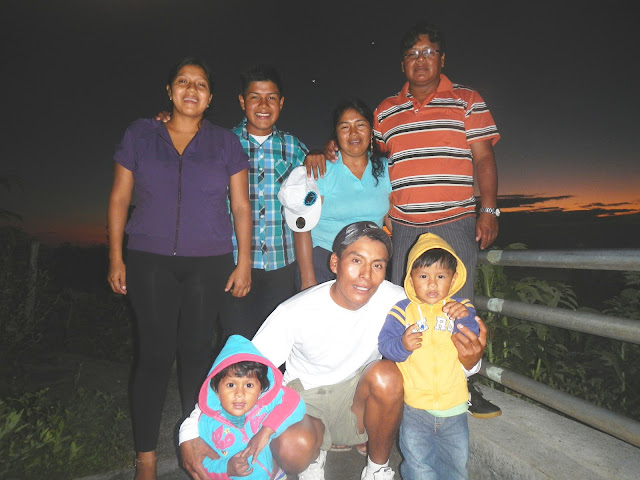
In other news, I wanted to talk about my host family here in the Galapagos. They are AMAZING. I have a very big family. I have a host mom and dad, a 13 year old brother, a 2 year old brother, and a 21 year old sister. My sister Rosa is engaged and just moved in to the bedrooms downstairs with her fiance and 2 year old daughter, Fina. My little niece, and my 2 year old host brother, Morfin, are very good at waking up early and coming into my room to play... My 13 year brother, Estiven, loves to surf/bogey board at the beach. He asks me every day to go surfing with him. My host dad is named Victor just like my real dad. Victor works in petroleum, but they also have a tourism agency. My host mom Maria coordinates the tourism agency when she is not working as a high school teacher. There is also a nice man named Gabriel who lives with us. He is the best friend of Victor and works on their boat, and helping with the little kids. Below from left to right: (Back row) Sister Rosa, Brother Estiven, Mom Maria, Dad Victor, (front row) Rosa's daughter Fina, Gabriel, and little bro Morfin.
It really impresses me how my host mom runs her company. She works with a Norwegian travel agency communicating via email to contract tourists. The most interesting part is that she only speaks Spanish and the company only speaks Norwegian. The two parties use google translate to translate the messages that they send. Apparently it works really well, because Maria says they are very reliable, always send the same number of tourists, and pay on time. Technology really amazes me!
As far as my living situation, I have my own room with a refrigerator, TV, and air conditioning (the best part!). I think I am the only student in my program that has air conditioning, and it is wonderful! In general the islands are very poor, the electricity usually goes out once/day and sometimes we don't have fresh water. I am lucky to have a family that has air conditioning and internet access.
I really feel part of the family living with the Changotasigs. Every weekend they invite me to do something fun with them. I have been up to their farm in the high lands, out fishing on their boat, and swimming at the beach with them. I was even invited to be the photographer for Rosa and Javier's wedding ceremony at the municipal building. However, my favorite thing to do with my family are the walks around town that they take in the evenings. The two little kids ride their hotwheel tricycles and the dogs come. We walk down to the pier, visit friends in the town, and stop to buy ice creams. This is the best time to practice my Spanish, as my host dad always has a lot to ask me. Also, we always see really cool wildlife, like this one time we saw an entire school of baby sting rays down by the fishing pier.
I wish I had more time to update my blog, but I am staying busy with classes and all the activities there are to do here! Just last week I was on Santa Cruz island swimming with sharks, climbing volcanoes, visiting giant tortoises, hiking through lava tunnels, and exploring pirate caves!
Miss you guys, wish you were here!
In other news, I wanted to talk about my host family here in the Galapagos. They are AMAZING. I have a very big family. I have a host mom and dad, a 13 year old brother, a 2 year old brother, and a 21 year old sister. My sister Rosa is engaged and just moved in to the bedrooms downstairs with her fiance and 2 year old daughter, Fina. My little niece, and my 2 year old host brother, Morfin, are very good at waking up early and coming into my room to play... My 13 year brother, Estiven, loves to surf/bogey board at the beach. He asks me every day to go surfing with him. My host dad is named Victor just like my real dad. Victor works in petroleum, but they also have a tourism agency. My host mom Maria coordinates the tourism agency when she is not working as a high school teacher. There is also a nice man named Gabriel who lives with us. He is the best friend of Victor and works on their boat, and helping with the little kids. Below from left to right: (Back row) Sister Rosa, Brother Estiven, Mom Maria, Dad Victor, (front row) Rosa's daughter Fina, Gabriel, and little bro Morfin.

It really impresses me how my host mom runs her company. She works with a Norwegian travel agency communicating via email to contract tourists. The most interesting part is that she only speaks Spanish and the company only speaks Norwegian. The two parties use google translate to translate the messages that they send. Apparently it works really well, because Maria says they are very reliable, always send the same number of tourists, and pay on time. Technology really amazes me!
As far as my living situation, I have my own room with a refrigerator, TV, and air conditioning (the best part!). I think I am the only student in my program that has air conditioning, and it is wonderful! In general the islands are very poor, the electricity usually goes out once/day and sometimes we don't have fresh water. I am lucky to have a family that has air conditioning and internet access.
I really feel part of the family living with the Changotasigs. Every weekend they invite me to do something fun with them. I have been up to their farm in the high lands, out fishing on their boat, and swimming at the beach with them. I was even invited to be the photographer for Rosa and Javier's wedding ceremony at the municipal building. However, my favorite thing to do with my family are the walks around town that they take in the evenings. The two little kids ride their hotwheel tricycles and the dogs come. We walk down to the pier, visit friends in the town, and stop to buy ice creams. This is the best time to practice my Spanish, as my host dad always has a lot to ask me. Also, we always see really cool wildlife, like this one time we saw an entire school of baby sting rays down by the fishing pier.
I wish I had more time to update my blog, but I am staying busy with classes and all the activities there are to do here! Just last week I was on Santa Cruz island swimming with sharks, climbing volcanoes, visiting giant tortoises, hiking through lava tunnels, and exploring pirate caves!
Miss you guys, wish you were here!
February 28, 2012
Tiputini
To emphasize how truly remote of a location the Tiputini reserve is, I will begin by explaining the process we took to get there. First we traveled 30 minutes from Quito by plane to a small village named Coca, then we took a 2 hour canoe ride along the Napo River, followed by a 2 hour truck ride through the jungle, and finally another 2 hour ride on the Tiputini river in canoe. Being deep in the Amazon was both a surreal and frightening experience. During the journey I remember my incredible excitement at seeing a river dolphin, and then soon afterwards seeing a Caiman crocodile and remembering I was hours away from any sort of emergency medical care. All the travel had tired us out so the remainder of the day of arrival was relatively relaxed. I spent some time fishing at the pier and wondering in the size of the plants and animals. In particular, the colors of the birds and giant bugs intrigued me the most.

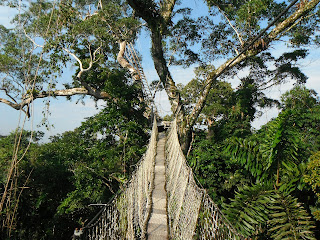 The next morning was when things really began. We dove right into the jungle with a hike through the forest to the canopy bridges. The canopy bridges are a special system of trees where researchers can climb several stories off the ground to system of 5 raised platforms connected by rope bridges. Researchers use the bridges to observe life that does not touch the jungle floor. I have been in sky scrapers and gone zip lining before, but this was a new high altitude experience unlike any I had experienced. The trees where the platforms were constructed were gigantic! Literally, nature made sky scrapers of tremendous strength. Up in the canopy, was an entirely different living world from what was below. I saw flowers, birds, monkeys, exotic fruits, and insects. What really impressed me were the small organism like lizards and ants that were somehow living 200 feet above the ground. It made me think that, more than likely, these lifeforms had been born above and probably never touched the earth below.
Later in the day, we got to go to the bird watching tower, an even taller and more gigantic observation center. My first observance, incredibly funny but also a reminder our isolated position in the forest, was that one of the workers of the camp had climbed the more than 12 flights of stairs to get to the top of the tower, and then climbed even further up the tree to make a cell phone call. This natural cell tower served as the only place workers could use to get a message to their family. My next experience was an awakening to the jungle. Initially, I used my binoculars without much success. I could hear plenty of birds and rustling of tress branches but was disappointed that the animals did not just jump out and show themselves. However, our professor Dr. Andres Leon, is a professional bird watcher, and taught us where to look for birds on the tall branches and how to distinguish their calls. Rapidly the entire scene changed. My newly trained eyes and ears began to see wildlife everywhere. We could not go more than 30 seconds without spotting a new bird. I saw things I had never seen before like the deep red squirrel cockoo, black fronted nunbird, yellow tailed macaws, and plenty more. Then after about an hour, the real treat came! An entire family of over 30 wholly monkeys began to course through the trees below us as they traveled through the tall branches below us. It was incredible to see the different sizes, the mothers carrying their young on their backs, one monkey even stretched from one branch to another and allowed a smaller monkey to scurry across his back like a living bridge.

Later that night we heard an excellent presentation about the Camera Trap project that has helped fund the reserve. The project has been going on for over 10 years and consists of several heat and motion sensing cameras placed on trails around the station to catch glimpses of rare animals. The station manager Diego, gave us a very informative presentation showing us pictures of large mammals such as peccary, sloths, jaguars, and other mammals that had been caught on film. This project is extremely valuable to the Tiputini biodiversity station because they have been able to identify new species, and capture never before photographed animals on film. This has helped to the success of the station and provided sources of funding for Tiputini.
The third day is when we really got to work. We broke into two groups and each took separate trails around the station in search of animal tracks. When we found good mammal tracks we worked to identify them, take pictures, and then set up a quadrant around the tracks. The quadrant was a 1m x 1m square marked by red tape. After setting up 10 of these quadrants, we continued to the Tiputini lake for a gorgeous canoe ride. The lake was bursting with wildlife. I saw turtles sleeping on logs in the sun, a caiman hiding in the reeves, an entire bush of yellow rumped caciques, and these gigantic turkey birds. My favorite by far were the animated yellow rumped caciques. There were dozens of them flying about in a very busy manner. Also, they had the most interesting nests. The nest was made of twigs and branches but had the shape of a tear drop that hung from low branches, and there were lots of them, almost like a group of condominiums.
Later that afternoon we did our bird census along the river. We tried to count and identify as many birds as possible in five 100m sectors. This is where I really learned that you can totally miss all the wildlife around you if you are not trained to look for it. I learned that small birds like sandpipers tend to hop along the sandy river banks, large birds like hawks prefer to circle above in the clear blue sky, and medium birds like flycatchers enjoy darting between the tall tree branches.
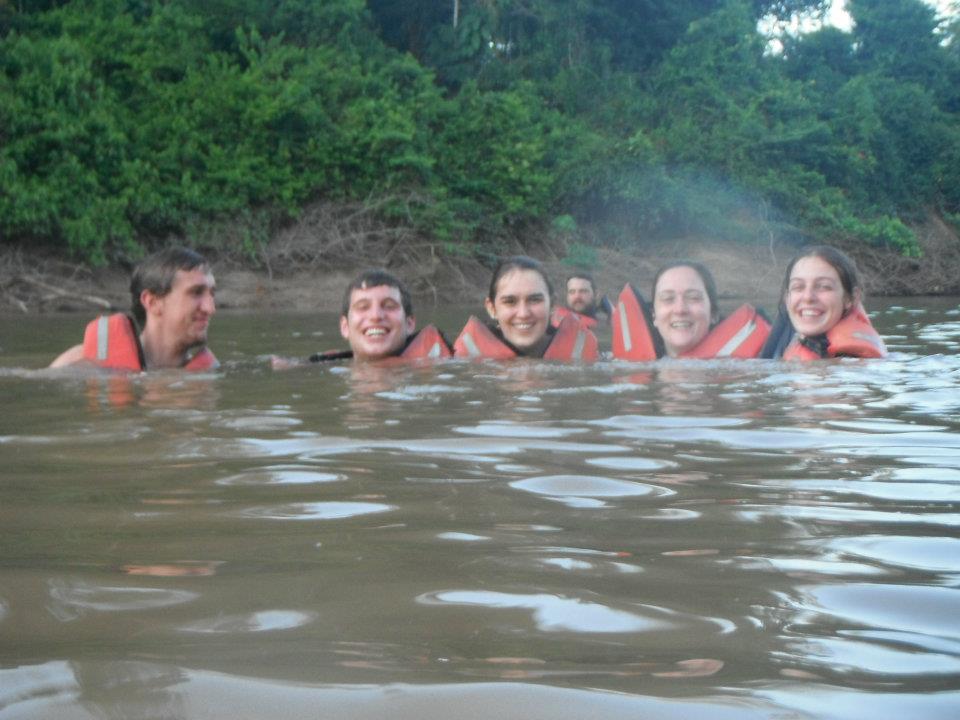
 The best part of that day was floating down the river in my bathing suit and life jacket. This experience let me observe nature while being inside it. The experience was surreal laying back and looking at rainbow macaws fly overhead, and hearing monkeys call through the trees, all while knowing that piranhas and caimans were swimming in the same water. There is no way I could have been more one with the Amazon if I had tried. Later that evening we had an informative lecture on bats. We learned that not all bats sleep in caves, some sleep under leaves, or in the cover of bromelias. I also learned the different types including insect eater, nectar drinker, seed eater, fish eating, and blood sucking bats. Fun fact: the largest bat in the world has a wing span of 1m and can be found in the forest around Tiputini!
 The following day we retraced our steps to observe new mammal tracks in our quadrants. Also, we took some time to learn how to survive in the jungle. Our guides showed us how to make animal traps from vines, and build shelters from palms. Additionally, we learned to identify trees capable of healing stomach illnesses and arthritis pain. The afternoon consisted of another bird census upstream, another river float. We stopped at a special point in the river where the black water stream meets the sandy Tiputini river. This was really cool to see because there was a visible different between the clear darker water flowing into the larger faster river. Also, we were blessed with an incredible surprise. As soon as we stopped the boat, someone spotted a very rare turtle.


 Walking around downtown Coca we saw other instances of wildlife being sold. In the market there were fresh piranhas in buckets, small monkeys, and rabbits in cages being sold for food. We also entered a handicraft store that was filled with jewelry made from bird feathers. All of these animals come straight from the jungle, none are farmed. The people that live in Coca and the nearby Pompeya market, where wild meat selling is increasing in popularity, have always used the jungle as their resource for survival. In class, we learned that the recent increase in wildmeat use and animal trafficking has grown with the presence of the oil companies drilling deep in the jungle. The new roads constructed by the oil companies provide access deep into areas of the jungle that were previously untouched. Also, these companies provide technology and transportation that enable the local people to remove wildlife more easily from the Amazon.
 Conflict has emerged between Ecuadorian officials and the locals in these towns. The government has put in regulation to stop people from selling wild animals on the streets of the Coca market, but the police are afraid to enforce these laws. First off many of the police are locals that come from these indigenous families that have been living in the region for decades. These people are afraid to castigate their friends and family members who use the forest to make their living. Furthermore, there were instances of police officers that actually did try to enforce these laws, and their families were attacked in the night in their homes by angry locals. The local people were outraged that anyone would try to take away their means of living, when they have survived off of the jungle and its resources for generations. Thus the conflict continues to exist, and in Coca the rain forest continues to be exploited for wild animals, food, and oil with irreversible consequences.
A final note in relation the data that we collected at Tiputini. When we returned to Quito we performed an analysis on our data to determine relative species abundance in these areas. What we learned was that the areas we surveyed in Tiputini are rich in biodiversity. However, in comparing the birds we saw in our census and the feathers seen in the Coca market it is clear that some of the lesser bird populations are being exploited by humans. The question remains how to regulate using wildlife as a resource?
Specifically, what is the sustainable use of wildlife as a resource? And is it justifiable to tell indigenous groups that have been hunting on these lands for generations to stop utilizing wildlife, when for many this resource is their only source of protein to eat, or only way to earn income for their families?
Here is a link to the papers that I read in class that provide insight to this topic:
http://onlinelibrary.wiley.com/doi/10.1111/j.1469-1795.2009.00262.x/full


Later in the day, we got to go to the bird watching tower, an even taller and more gigantic observation center. My first observance, incredibly funny but also a reminder our isolated position in the forest, was that one of the workers of the camp had climbed the more than 12 flights of stairs to get to the top of the tower, and then climbed even further up the tree to make a cell phone call. This natural cell tower served as the only place workers could use to get a message to their family. My next experience was an awakening to the jungle. Initially, I used my binoculars without much success. I could hear plenty of birds and rustling of tress branches but was disappointed that the animals did not just jump out and show themselves. However, our professor Dr. Andres Leon, is a professional bird watcher, and taught us where to look for birds on the tall branches and how to distinguish their calls. Rapidly the entire scene changed. My newly trained eyes and ears began to see wildlife everywhere. We could not go more than 30 seconds without spotting a new bird. I saw things I had never seen before like the deep red squirrel cockoo, black fronted nunbird, yellow tailed macaws, and plenty more. Then after about an hour, the real treat came! An entire family of over 30 wholly monkeys began to course through the trees below us as they traveled through the tall branches below us. It was incredible to see the different sizes, the mothers carrying their young on their backs, one monkey even stretched from one branch to another and allowed a smaller monkey to scurry across his back like a living bridge.

Later that night we heard an excellent presentation about the Camera Trap project that has helped fund the reserve. The project has been going on for over 10 years and consists of several heat and motion sensing cameras placed on trails around the station to catch glimpses of rare animals. The station manager Diego, gave us a very informative presentation showing us pictures of large mammals such as peccary, sloths, jaguars, and other mammals that had been caught on film. This project is extremely valuable to the Tiputini biodiversity station because they have been able to identify new species, and capture never before photographed animals on film. This has helped to the success of the station and provided sources of funding for Tiputini.
The third day is when we really got to work. We broke into two groups and each took separate trails around the station in search of animal tracks. When we found good mammal tracks we worked to identify them, take pictures, and then set up a quadrant around the tracks. The quadrant was a 1m x 1m square marked by red tape. After setting up 10 of these quadrants, we continued to the Tiputini lake for a gorgeous canoe ride. The lake was bursting with wildlife. I saw turtles sleeping on logs in the sun, a caiman hiding in the reeves, an entire bush of yellow rumped caciques, and these gigantic turkey birds. My favorite by far were the animated yellow rumped caciques. There were dozens of them flying about in a very busy manner. Also, they had the most interesting nests. The nest was made of twigs and branches but had the shape of a tear drop that hung from low branches, and there were lots of them, almost like a group of condominiums.
Later that afternoon we did our bird census along the river. We tried to count and identify as many birds as possible in five 100m sectors. This is where I really learned that you can totally miss all the wildlife around you if you are not trained to look for it. I learned that small birds like sandpipers tend to hop along the sandy river banks, large birds like hawks prefer to circle above in the clear blue sky, and medium birds like flycatchers enjoy darting between the tall tree branches.
 The following day we retraced our steps to observe new mammal tracks in our quadrants. Also, we took some time to learn how to survive in the jungle. Our guides showed us how to make animal traps from vines, and build shelters from palms. Additionally, we learned to identify trees capable of healing stomach illnesses and arthritis pain. The afternoon consisted of another bird census upstream, another river float. We stopped at a special point in the river where the black water stream meets the sandy Tiputini river. This was really cool to see because there was a visible different between the clear darker water flowing into the larger faster river. Also, we were blessed with an incredible surprise. As soon as we stopped the boat, someone spotted a very rare turtle.

This turtle is called the matamata, and looks like it is from the prehistoric age. It has a triangular head and tiny tiny beady black eyes. He was very vicious and would swing his long neck around wildly trying to snap at your hand. After taking a million pictures, we released the turtle and began fishing for piranha. The first thing we did was catch a small fish with a piece of bread to use as bate for the larger piranhas. Another interesting factoid: yes piranhas eat meat, but they prefer smaller fish and are generally afraid of large animals; it would be unlikely for them to eat a human unless there was absolutely no other food sources around.


The journey back to civilization was a long one but came with surprises. First off we got to see an amazing water snake during our canoe ride back to Coca. Next we had some time to explore Coca before our plane left. This is where the environmental issues really exposed themselves. As we stepped off the boat we entered the courtyard of a hotel that used wild animals as tourist attractions. There were peacocks walking around freely, then toucans and parrots in cages, and squirrel monkeys scurrying about the tables in the restaurant. All of these animals were beautiful to see and adorable to play with, but it reminded me that they would never be able to be released again into the wild or reproduce in their current setting. Furthermore, seeing the endangered Tarsier monkey among the caged animals, reminded me of my professors words, "Exotic animal trafficking is the most lucrative business in Latin America behind drug and weapons selling."
Walking around downtown Coca we saw other instances of wildlife being sold. In the market there were fresh piranhas in buckets, small monkeys, and rabbits in cages being sold for food. We also entered a handicraft store that was filled with jewelry made from bird feathers. All of these animals come straight from the jungle, none are farmed. The people that live in Coca and the nearby Pompeya market, where wild meat selling is increasing in popularity, have always used the jungle as their resource for survival. In class, we learned that the recent increase in wildmeat use and animal trafficking has grown with the presence of the oil companies drilling deep in the jungle. The new roads constructed by the oil companies provide access deep into areas of the jungle that were previously untouched. Also, these companies provide technology and transportation that enable the local people to remove wildlife more easily from the Amazon. Conflict has emerged between Ecuadorian officials and the locals in these towns. The government has put in regulation to stop people from selling wild animals on the streets of the Coca market, but the police are afraid to enforce these laws. First off many of the police are locals that come from these indigenous families that have been living in the region for decades. These people are afraid to castigate their friends and family members who use the forest to make their living. Furthermore, there were instances of police officers that actually did try to enforce these laws, and their families were attacked in the night in their homes by angry locals. The local people were outraged that anyone would try to take away their means of living, when they have survived off of the jungle and its resources for generations. Thus the conflict continues to exist, and in Coca the rain forest continues to be exploited for wild animals, food, and oil with irreversible consequences.
A final note in relation the data that we collected at Tiputini. When we returned to Quito we performed an analysis on our data to determine relative species abundance in these areas. What we learned was that the areas we surveyed in Tiputini are rich in biodiversity. However, in comparing the birds we saw in our census and the feathers seen in the Coca market it is clear that some of the lesser bird populations are being exploited by humans. The question remains how to regulate using wildlife as a resource?
Specifically, what is the sustainable use of wildlife as a resource? And is it justifiable to tell indigenous groups that have been hunting on these lands for generations to stop utilizing wildlife, when for many this resource is their only source of protein to eat, or only way to earn income for their families?
Here is a link to the papers that I read in class that provide insight to this topic:
http://onlinelibrary.wiley.com/doi/10.1111/j.1469-1795.2009.00262.x/full
November 7, 2011
Pictures posted!
Hey guys I posted pictures from my trip to Cotapaxi Mountain, Harry Potter Halloween at USFQ and my Fall break trip to: Cuenca, Guayquil, Montañita, and Puerto Lopez. Check them out in the Gallery!
October 27, 2011
Celebrating Halloween today at USFQ!
The school has been transformed into Hogwarts school of witchcraft and wizardry! Quidditch tournament today @ 12! lol
Events of the day:
Events of the day:
CRONOGRAMA:
1. Laguna -11h30: inauguración campal: música, incantaciones, agenda, desfile de unicornios, presentación de reglas para concursar por la Copa USFQ por Colegios
2. Cancha de futbol -12h00: Inicio torneo de Quidditch.
3. Hall Principal -12h30: Exhibición de magia Hall principal
4. Plaza D. Vinci -13h00: concurso de disfraces y premiación
5. Cafetería -13h30: cocina ,magia,menú Hogwarts
6. Teatro Calderón de la Barca -14h30: concurso de Trivia
7. Hall Principal -15h30: premios y exhibición de trabajos participantes en el concurso de Ilustración y en el de Fan Fiction “Harry Potter en el Ecuador”
8. 16h00- Finales Quidditch, entrega de la Copa USFQ al Colegio Ganador
Cada actividad de la jornada entrega puntos.
October 8, 2011
American industries you wouldn't expect to find in Ecuador:
I have seen each one of these stores here, some may surprise you:
Papa John's
Dominos
Pizza Hut
Radio Shack
Hallmark
KFC
McDonalds
Burger King
Forever 21
Victoria Secret
Papa John's
Dominos
Pizza Hut
Radio Shack
Hallmark
KFC
McDonalds
Burger King
Forever 21
Victoria Secret
October 6, 2011
September 30, 2011
Pura vida!
Hey guys!
I had 3 exams this week so I'm behind on posts. All my pics are updated though so check out the gallery! You absolutely have to see the Misahaullí pics from my unbelievable birthday experience in the Amazon rainforest! The are INCREDIBLE!!! Anyways, I'm on my way out the door for my Baños trip (amazing hot springs next to an active volcano) this weekend. I'll make sure to post updates about Mindo, the Amazon, and Baños when I get back!
I had 3 exams this week so I'm behind on posts. All my pics are updated though so check out the gallery! You absolutely have to see the Misahaullí pics from my unbelievable birthday experience in the Amazon rainforest! The are INCREDIBLE!!! Anyways, I'm on my way out the door for my Baños trip (amazing hot springs next to an active volcano) this weekend. I'll make sure to post updates about Mindo, the Amazon, and Baños when I get back!
September 20, 2011
Welcome Party for Exchange Students
Hola!


So I forgot to mention the awesome welcome party that USFQ had for all the exchange students a few weeks back. It was at this beautiful estate in Lumbisi, about 15min from where I am living. The estate was actually the home of an Ecuadorian student's uncle. The place was beautiful. I guess they rent it for events and weddings. There were 3 soccer fields, a pool and bathhouse, a wooded area with a playground, and a gorgeous mansion.

The planned events included playing traditional Ecuadorian games. The challenge for the first game was to climb this tall pole and pop the balloons at the top. Normally, the pole is greased, but they didn't want us to ruin our clothing so the omitted that part. Even with this slight advantage it was still extremely challenging. There were only about 5 people of 200+ that could actually do it, and there were no ladies that did it successfully. Below is a picture of a few of my friends and my attempts... Rick, the ex-marine the one on the far left in the white shirt, was among the elite to successfully climb to the top!


Other games included potato sack races, piñatas, and running through a maze carrying an egg on a spoon. After the games we ate a traditional Ecuadorian meal of pork, potatoes, ahí (a spicy salsa with onions), and other foods that I do not remember the names of. This lil piggy below looks scary but he was delicious!

The remainder of the day consisted of enjoying traditional Ecuadorian pastimes such as drinking beer, playing soccer, and a pretty awesome dance competition. All in all it was an amazing welcome party!
September 16, 2011
Sep 7th, Fútbol: Jamaica vs. Ecuador
 SOCCER!
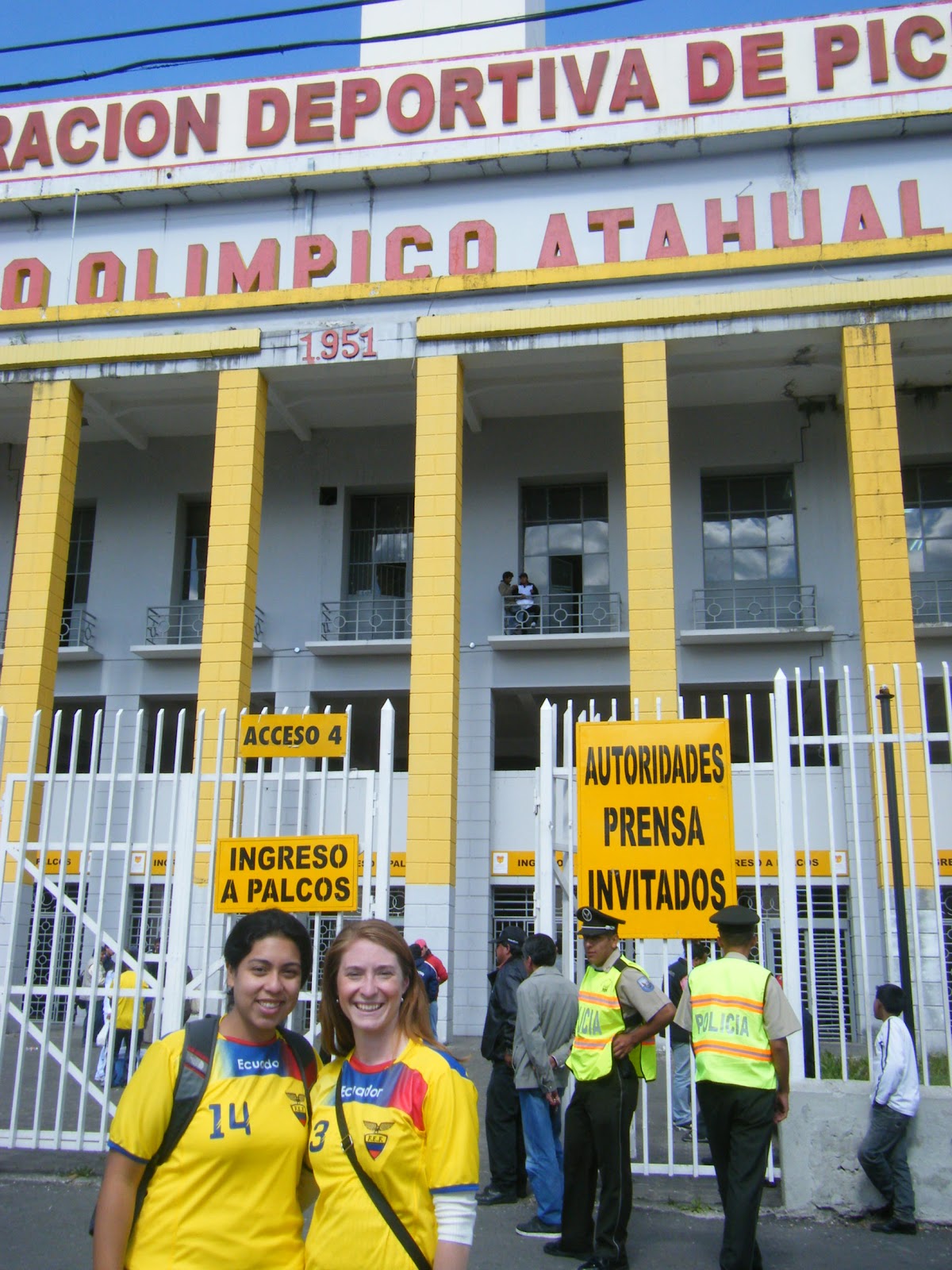
 Clearly fútbol one of the most important things in Latin American culture! So I of course had to go see the Ecuadorian national team play at the Olympic stadium in Quito. The game was Jamaica vs. Ecuador, and honestly the stadium was a bit empty because the game was expected to be an easy win for Ecuador. We bought some pretty sweet jerseys outside the stadium for $5 and I got to hear the Ecuadorian national anthem for the first time, which sounds a bit like a theme song to a Dr. Seuss movie. During the game we snacked on empanadas, popcorn, and beer. At the half they set off a display of red, blue, and yellow smoke bombs to replicate the Ecuadorian flag.  Also, it was interesting to hear all the cheering, chanting, whistling, and tormenting that goes on during the game. Ecuador ended up winning 5-2! Hooray! Later, I am hoping to go to a game between the local leagues here because they say the crowd gets a bit more rowdy and the police are usually called in to do crowd control. I did get a little preview of the police in their crowd control gear.
 Also, it was interesting to hear all the cheering, chanting, whistling, and tormenting that goes on during the game. Ecuador ended up winning 5-2! Hooray! Later, I am hoping to go to a game between the local leagues here because they say the crowd gets a bit more rowdy and the police are usually called in to do crowd control. I did get a little preview of the police in their crowd control gear.
 Sep 1st -The 23rd Birthday of the University San Francisco de Quito
Hey all, so birthdays here are a pretty big deal!


For the 23rd birthday of my University here in Quito, the administration put together a huge event. Classes were canceled from 11:30-1pm and all the students met in the gym for an assembly. All of the professor were dressed up in their graduation regalia and the gym was decorated with balloons and streamers. The chancellor said a few words and then they invited a famous poet to speak about liberty. After the assembly everyone was invited to the school plaza for a reception. They set up a runway in the plaza and all the sports teams of the university put on a school pride fashion show faulting all the USFQ wear that you can buy in the bookstore. We all sang Happy Birthday and then FREE cake and sangria was served while a live band played. Surprisingly, there was no limit to the amount of cake or sangria; it was eat your fill! The cake was specially made by the school´s gastronomy department and the entire event was really enjoyable. I was also quite surprised to see several of my professors enthusiastically toasting and drinking sangria. I was even further surprised by the amount of self control that the Ecuadorians exhibited. The plaza mostly cleared around 1:30pm after students diligently returned to class. If there was ever an event like this at U of I, where there was unlimited FREE cake and alcohol, absolutely no one would go to class and the entire campus would be a disaster... Apparently this is done every year on the 1st of September and is thoroughly enjoyed by the students.

September 14, 2011
Otavalo- August 27th
 So I am a little behind, but here´s the update: Two weekends ago I went on an excursion with my program group to the city of Otavalo. Along the way we stopped at 'La mitad del mundo', aka 'The middle of the world'. I got to stand on the equator! This is one of the few places on Earth where your GPS will actually read 0' 0' 0'. It is also one of the only places where you can see all of the star constellations! I took several pictures standing on the dividing line between the northern and southern hemisphere. Unfortunately, none of the tricks about water spinning in different directions depending on the hemishper are true. Toilets flush pretty much any way the manufacturers want. Try it at home, you can make the water in your drain spin different directions based on how you pull the plug out.
 The next place we stopped at was this biscocho factory! Biscochos are very similar to biscotti cookies. The biscocho is a very traditional cookie that is baked twice and then served with hot chocolate, sugar, and cheese. They are absolutely delicious. In the small bakery that we visited the people work making 1000s and selling 1000s every day. They have these giant ovens and have a systematic way of making and cutting the dough. You can get 10 biscochos for only $1. I brought a bag to share with my host family. yum!
Outside Otavalo we stopped at a scenic view point for some pictures and picked up two indigenous Andean girls. The girls were adorable in their traditional outfits. They sung songs for us in Quichau and sold pretty scarves and bracelets on the way to the market.
In Otavalo, we went to the largest open air market in South America. This place had everything you could ever imagine from alpaca sweaters to silver jewelry to India Jones hats. The artwork was beautiful! We stopped for a delicious lunch at a local restaurant where they had a live Andean band. After eating our fill the shopping began!
I got really good at haggling! The prices were already cheap in comparison to the US but bartering is part of the experience. I bought a traditional pair of leather sandals and a silver ring for myself. I also did a little bit of Christmas shopping. The prices were so cheap and the items so unique that I will definitely be going back with a bit more money next time.
Later that day we checked into our hostel and then went to see the waterfall! Ecuadorians are not all that safety conscience so we were able to climb and hike up and down the falls! We also discovered a really cool cave that opens up behind the falls. I got pretty daring and actually walked across an old log that made a bridge across the river.


 When we returned to the hostel a wonderful dinner was prepared with live entertainment. At the meal we sampled a traditional Ecuadorian drink made of blackberry. For music two indigenous men played Andean instruments for us while their children danced for us. The musicians were incredibly talented. Each one played more than three different instruments from guitar to flute to harmonica, etc. All of the children were dressed up in traditional outfits and some wore masks. The entire experience was definitely the highlight of my trip thus far. I loved the music so much that I bought 3 of their CDs.
Sunday morning we went to an instrument factory in the town. This was actually located in the home of the master instrument crafter. This indigenous man was completely self taught at making and playing instruments. He demonstrated how to make a ´Rondedor´, a very traditional type of flute played in Ecuador. After that, he showed how to play all the instruments in his shop and gave us a try. Before we left, he played a song with his daughters on several of the instruments that he made.

We spent the remainder of the day hiking the mountains surrounding San Pablo lake. We also went on a boat ride around to see the small island in the lake´s center created years ago by a volcano.


The last place we stopped was a small town outside Otavalo called Cotacachi. Cotacachi is very famous for its leather crafts. There were a ton of shops selling leather boots, jackets, purses, and more! By this point I was completely, out of money but I intend to go back to by a nice motorcyle jacket!
All in all a very eventful weekend! Check out my photos in the gallery!
September 7, 2011
feeling sick :(
Hey guys sorry I haven't updated the blog in a while. I've been feeling under the weather. I caught a strange Ecuadorian bug and have been bed ridden the last few days. What is kind of cool is that doctors still do house calls here in Ecuador. It makes you feel really special. Anyways, I will update you when I am feeling better. In the meantime check out my newly uploaded photos.
August 25, 2011
Where I live & learn


The above are pictures of the University of San Francisco de Quito campus where I am taking classes taught in Spanish this semester. The below pictures are the home of my host family where I am living. The house has a small garden in the backyard where we have a lemon tree. Yesterday, I picked fresh lemons and made delicious lemonade for lunch. Can't do that in my yard back home in the US. Yes, be jealous Ecuador is gorgeous!


August 23, 2011
Rainy day
The past 5 days have been beautiful sunny clear skies in the morning and then everyday like clockwork rain from 3-6pm... today was no different except for a few unfortunate events:
Ecuador has claimed my umbrella and cell phone. In clarification, I forgot my umbrella on the bus to Quito, and I left my phone in a taxi. So these instances were totally my fault; nothing stolen... I only hope some fortunate Ecuadorian is putting these items to good use!
Ecuador has claimed my umbrella and cell phone. In clarification, I forgot my umbrella on the bus to Quito, and I left my phone in a taxi. So these instances were totally my fault; nothing stolen... I only hope some fortunate Ecuadorian is putting these items to good use!
August 22, 2011
Festival de San Bartolomé
I had a very busy weekend!
This weekend was the Feast of San Barolomé in Lumbisí. While the town is relatively small, these people really know how to party. Starting with Friday night they had the crowning of the Queen of the fiestas and her court. Then they served authentic food and had a live band. The entire town danced until after midnight.
Saturday was beyond my imagination. The activities started at 8am with parades and people dressed in masks and costumes. I did not actually arrive until about 7pm because I spent the day helping my host family with a birthday party for their grandmother! By the time I got there the entire town was dressed in clown or cowboy costumes and had consumed a significant amount of alcohol... but I got there just in time for the best part of the Fiesta: FIREWORKS!
Now in comparison, we in the US really have no idea of how to put on a good fireworks show. The 30 minutes of sparkles in the sky on the 4th of July is nothing compared to the 3.5 hour celebration that I witnessed in Lumbisí. Safety is not emphasized quite as much here in Ecuador when it comes to explosives, yes I said explosives. Sure there were the traditional type of fireworks in the sky, but there were also these giant castles made of wood rigged with multiple levels of bottle rockets, firecrackers, and whatever else you can think of. Each castle took over 25 minutes to finish. You really had to be on the lookout when watching these things because they shoot fire in random directions and you are CLOSE. So close in fact, that all the children and drunk men would run under the spewing sparks! It was spectacular! I have never seen anything like this! You can check out all my photos and intense videos in my gallery but I don't think even those can do justice to what I experienced.
Another really cool part of the night were Los Globos. These are giant paper machete balloons that people fill with hot air and then release into the night sky. The were beautiful. Check out the video below:
August 21, 2011
Last week's Adventures
My first week in Ecuador was incredibly exciting. I spent most of the week touring Quito with my program coordinator María and the 15 students from my program. In total there are 200 international students studying at USFQ this semester, the majority from US schools like UNC, Mizzou, DePaw, Oregon, etc. However, the students on my specific program are composed of 10 students from U of I and 5 from Penn State. This week we visited the Botanical gardens of Quito. Did you know that there are 2,000+ species of orchids in Ecuador?! The climate is always mild so they bloom year round. Also, the fruits here are absolutely delicious! They have 5 different types of bananas and dozens of other fruits that I have never seen before. My host sister was actually complaining how bad the fruit was when she visited the Caribbean... I think they are spoiled here because even the most unripe fruit is delicious. Ecuadorians should never try fruit in the US, lol.
We also visited La Casa de Cultura, the Museum of Anthropology in Quito, as well as the City Museum. This history of Ecuador and its people is very interesting because there were/still are so many indigenous groups in the region. Additionally, there was a large influence from the Incas and Spanish.
If you saw the pictures that I posted, then you know that Thursday I went to the colonial part of Quito. This part of town is absolutely beautiful with dozens of churches dating back 400 years. I visited several historic spots including the Church of St. Augustine, the Church of the Companía de Jesus, the Plaza of St. Francis, and Independence Plaza. St. Augustine is actually the site of Independence Hall where Ecuadorians signed their first Constitution in 1809. Independence plaza houses the Presidential Palace and marks the site where the exposition that discovered the Amazon River began. If you have time you should look up this story the exhibition started out with something like 900 people and ended with only 30 floating down the Amazon into the Atlantic. We also stopped in at the Quito Cultural Center to see a demonstration by traditional Andean dancers. Check out the album titled "Alisha arrives in Ecuador" to see a video of the dancers.
Last Friday we went to an Indigenous town a little ways outside Quito. The gap between rich and poor in Ecuador is very wide. It is surprising how I can go 20 minutes away from where I am living and find houses without running water. Poverty is most evident in indigenous communities, because the land is owned and governed by the community itself; therefore it receives little to no support from the Ecuadorian government. Lumbisí is where I plan to do most of my volunteer work while I am here. On Friday we visited a one room nursery school, a primary school of 300 students, a technical high school, and a home for the elderly. We spent our time talking to children and serving lunch to senior citizens. Once I know how much free time I will have with classes I am hoping to go back to the high school to teach English, Math, and Computers to students. What amazed me is how kind everyone is in this very tight knit community. Each one of the senior citizens thanked me for serving them lunch saying Le pargaré a Dios," which means "May God repay you."
We also visited La Casa de Cultura, the Museum of Anthropology in Quito, as well as the City Museum. This history of Ecuador and its people is very interesting because there were/still are so many indigenous groups in the region. Additionally, there was a large influence from the Incas and Spanish.
If you saw the pictures that I posted, then you know that Thursday I went to the colonial part of Quito. This part of town is absolutely beautiful with dozens of churches dating back 400 years. I visited several historic spots including the Church of St. Augustine, the Church of the Companía de Jesus, the Plaza of St. Francis, and Independence Plaza. St. Augustine is actually the site of Independence Hall where Ecuadorians signed their first Constitution in 1809. Independence plaza houses the Presidential Palace and marks the site where the exposition that discovered the Amazon River began. If you have time you should look up this story the exhibition started out with something like 900 people and ended with only 30 floating down the Amazon into the Atlantic. We also stopped in at the Quito Cultural Center to see a demonstration by traditional Andean dancers. Check out the album titled "Alisha arrives in Ecuador" to see a video of the dancers.
Last Friday we went to an Indigenous town a little ways outside Quito. The gap between rich and poor in Ecuador is very wide. It is surprising how I can go 20 minutes away from where I am living and find houses without running water. Poverty is most evident in indigenous communities, because the land is owned and governed by the community itself; therefore it receives little to no support from the Ecuadorian government. Lumbisí is where I plan to do most of my volunteer work while I am here. On Friday we visited a one room nursery school, a primary school of 300 students, a technical high school, and a home for the elderly. We spent our time talking to children and serving lunch to senior citizens. Once I know how much free time I will have with classes I am hoping to go back to the high school to teach English, Math, and Computers to students. What amazed me is how kind everyone is in this very tight knit community. Each one of the senior citizens thanked me for serving them lunch saying Le pargaré a Dios," which means "May God repay you."
August 15, 2011
Arrived safe in Quito, Ecuador!
Hey All,
I had a safe arrival in Ecuador! Flight #1 was 3 hours from Chicago to Miami and flight #2 was 3 hours from Miami to Quito! There were no delays, I got both my bags, and they even served dinner on the second flight! (very surprising considering I flew AA). Ecuador reminds me of St. Lucia. It is very mountainous with lots of flowers. There are also many comforts from home. Driving through Quito we passed a McDonalds, KFC, and Payless Shoesource (my favorite). My host family is wonderful. The mom and dad are very accomodating and my younger host sister loves to talk! My living situation is definitely an upgrade from Argentina. I am living in a very safe/ritzy gated community only 5 minutes from the University. I have my own room with a full size bed, large closet, internet access, there is a washer and dryer in the house, and I have a new 10 inch high friend named Nana the poodle (who is very quiet). I arrived here on what my host dad said is their coldest day of the year yet... my host sister was wearing a winter coat and hat... it was 65 degrees and I was sweating in my capris and sweatshirt. Oh well, I guess us Chicagoans have a different idea of what cold is... Tomorrow I have orientation at the University. I will be available to skype after 5pm (Quito is the same time zone as Chicago).
I had a safe arrival in Ecuador! Flight #1 was 3 hours from Chicago to Miami and flight #2 was 3 hours from Miami to Quito! There were no delays, I got both my bags, and they even served dinner on the second flight! (very surprising considering I flew AA). Ecuador reminds me of St. Lucia. It is very mountainous with lots of flowers. There are also many comforts from home. Driving through Quito we passed a McDonalds, KFC, and Payless Shoesource (my favorite). My host family is wonderful. The mom and dad are very accomodating and my younger host sister loves to talk! My living situation is definitely an upgrade from Argentina. I am living in a very safe/ritzy gated community only 5 minutes from the University. I have my own room with a full size bed, large closet, internet access, there is a washer and dryer in the house, and I have a new 10 inch high friend named Nana the poodle (who is very quiet). I arrived here on what my host dad said is their coldest day of the year yet... my host sister was wearing a winter coat and hat... it was 65 degrees and I was sweating in my capris and sweatshirt. Oh well, I guess us Chicagoans have a different idea of what cold is... Tomorrow I have orientation at the University. I will be available to skype after 5pm (Quito is the same time zone as Chicago).
Love and kisses,
Alisha
Subscribe to:
Posts (Atom)